In August I spent two weeks in the USA; one week in Chicago, attending a conference at KICP, and the second week on holiday, taking the sleeper train from Chicago to Seattle and spending five days on the west coast.
It was a big and exciting trip, and I was determined to capture it as best I could in photographs. I have a good digital camera and of course my phone, but for some reason I really liked the idea of taking along a film camera too. I grew up using film cameras (mostly disposable ones on holiday) and wanted to explore how the medium would give me a different perspective on the trip.
I wasn’t sure how much I would use the camera after I got home, and so I went as cheap as possible: after watching a few Youtube videos I bought an Ilford Sprite 35-II for about €40 from FNAC, and three rolls of black and white film from my local branch of Nation Photo (Kentmere Pan 100) for about another €15. I particularly wanted to try photographing in black and white, because I had recently been doing a lot of digital street photography, and when living in Paris it’s hard not to want to imitate Cartier-Bresson just a little bit.
The Sprite is one step above a disposable camera. With a plastic lens and no functionality except a shutter and a flash (one AAA battery required) I was not expecting to take great quality photographs. However, from the moment I held the camera in my hands I knew I was going to have fun with it. I love the design and the retro feel of the camera, despite it being plastic. I was also pleased that I remembered how to load film into the camera, despite it being at least fifteen years since I last did it.
On my first day in Chicago, I walked from my Airbnb over towards the lakeshore. I took these photos of the Museum of Science and Industry and an interesting police barrier that did not seem to be deterring many people at the beach.
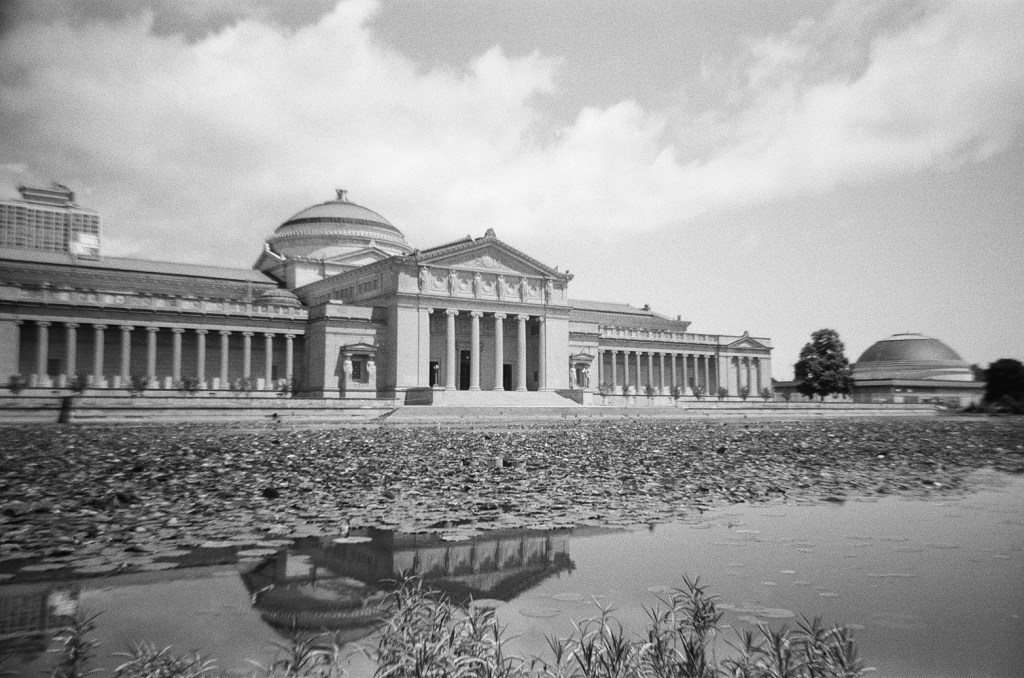
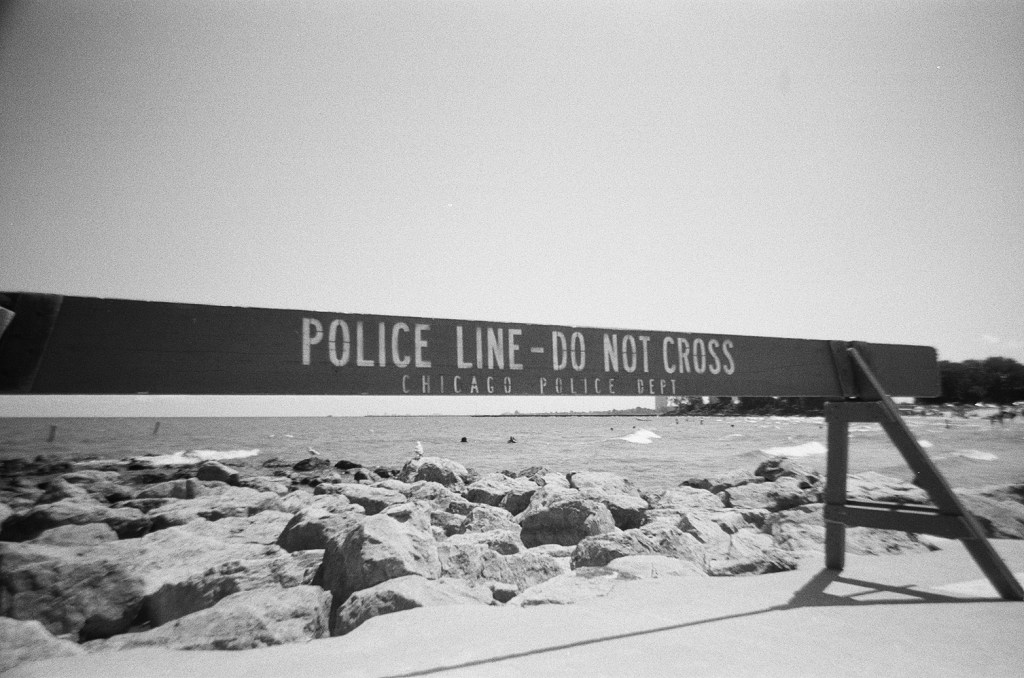
I really like how the reflection of the columns and dome in the lake came out in the photo of the museum (photographing reflections is one of my favourite things). However, something that I learnt after getting these photos developed is that the Sprite’s viewfinder is not especially representative of the actual exposure — it’s a smaller area, and as you can see from these photos I did not get the framing quite right, with the left side of the images being cut off.
Over the next few days, I shot some photos during the conference, and at some social events where we went to the beach at Jackson Park and Promontory Point.
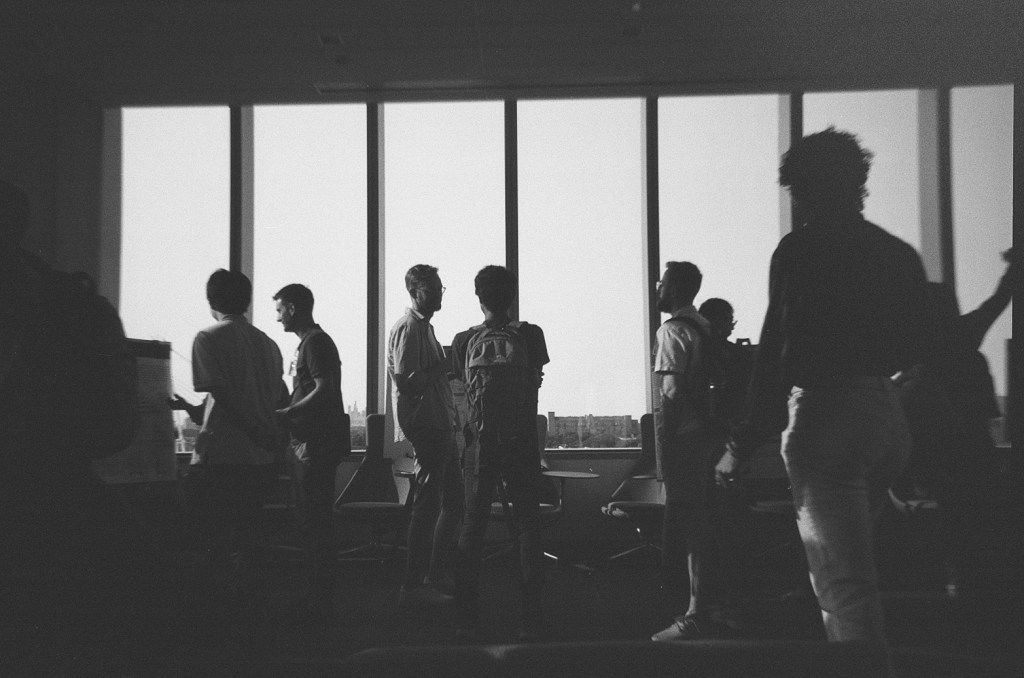
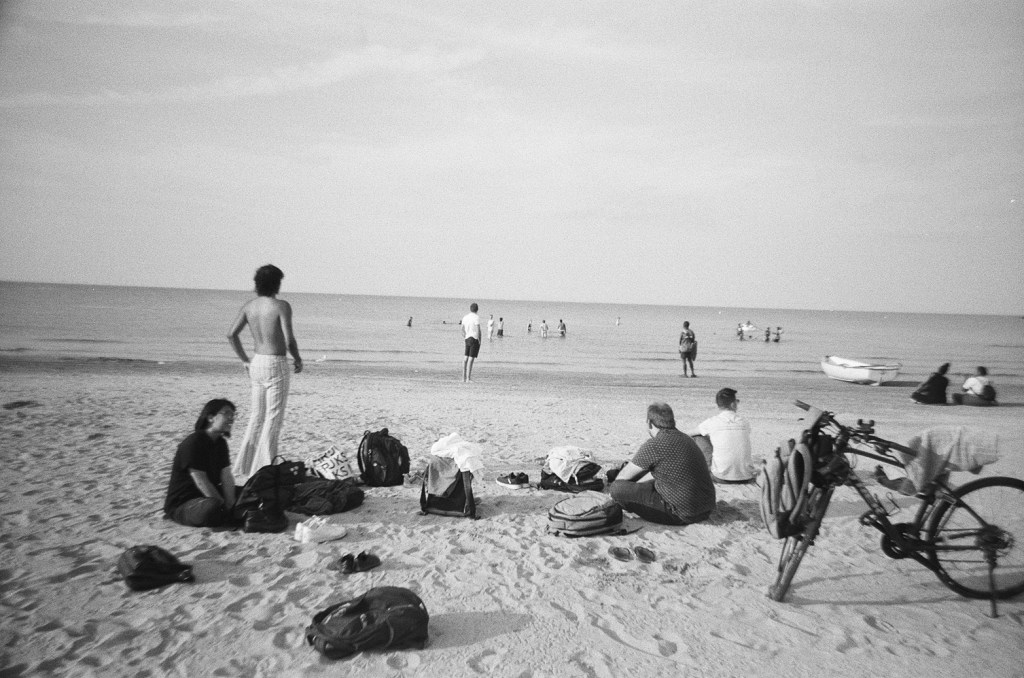
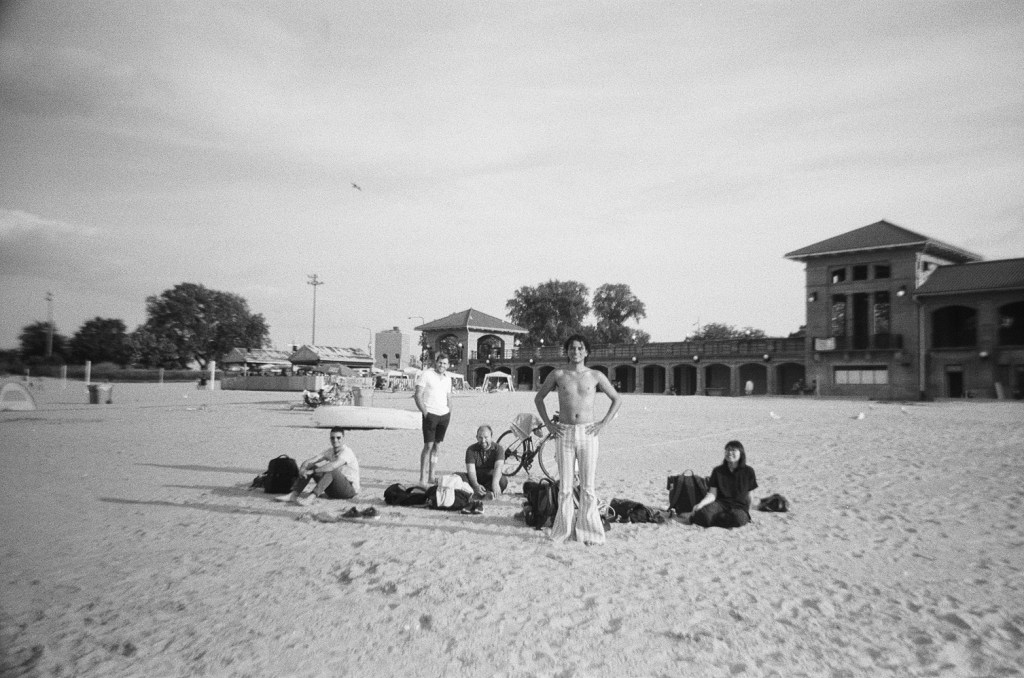
I love the contrast in the first image, along with the sense of life in motion and the faces in shadow. I’m impressed by the depth of field the Sprite produces, as in the left-hand photo at the beach. I like the placement of the figures in both photos and how they draw the eye across the frame in different directions; in the left the alignment was coincidental but the right is of course posed.
On my final day in Chicago I walked around the Loop and along by the river. I was determined to use up the roll of black and white film I had in the camera as I wanted to shoot in colour for at least some of the time I was on the west coast.
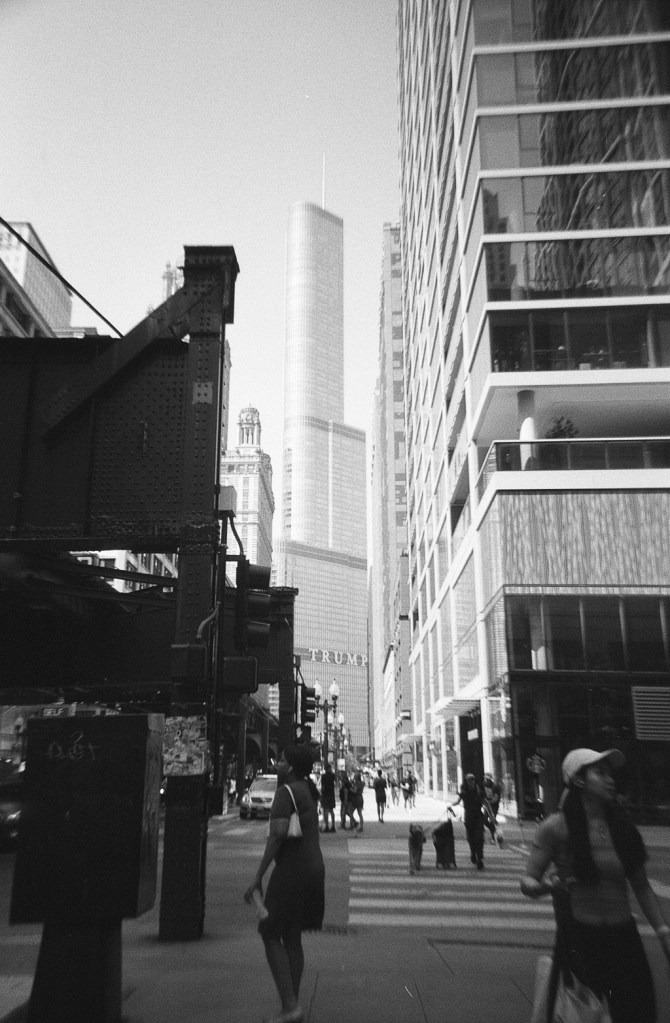


I was struck by seeing the Trump Tower, as I was not aware that there was one in Chicago. Another thing that I couldn’t get over was the juxtaposition of architecture; tiny old buildings dwarfed by these huge glass edifices. I noticed that a lot of the older architecture in the Loop was 1930s Art Deco style skyscrapers — the original sort, probably no more than 20 storeys. These photos capture the feeling of the traffic, the gridded streets disappearing off to the horizon, and the oppression and shadow created by the tall buildings and overstreet metro tracks.
Close to the Civic Opera House, I found a CVS and asked at the counter if they had any 35mm film. I was in luck — they had just one packet left, of Fujifilm Xtra 400, which set me back about $30. I was now shooting in colour.
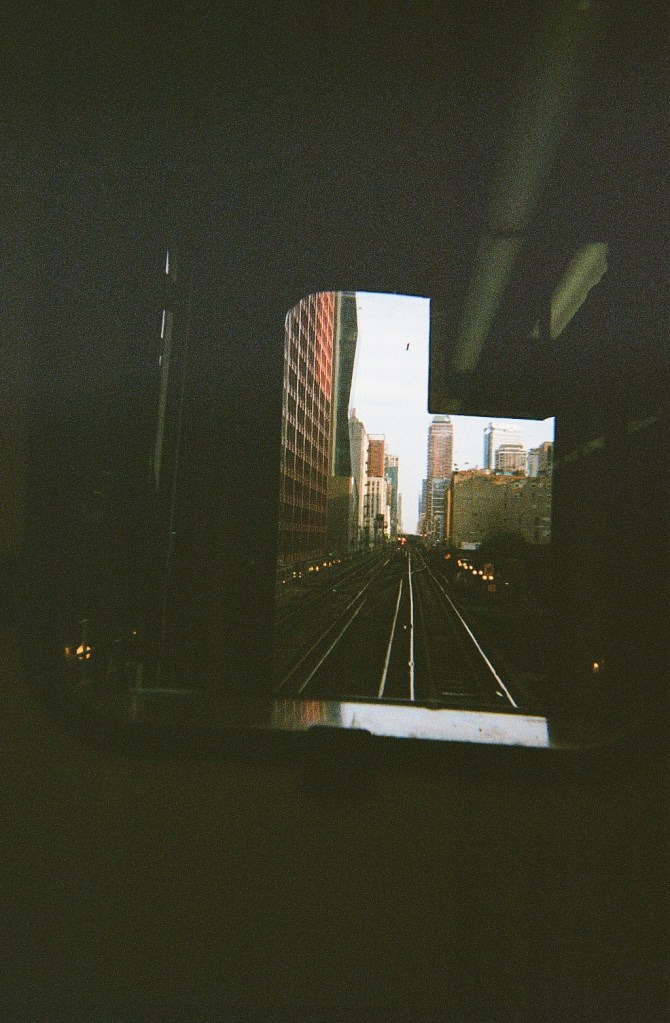
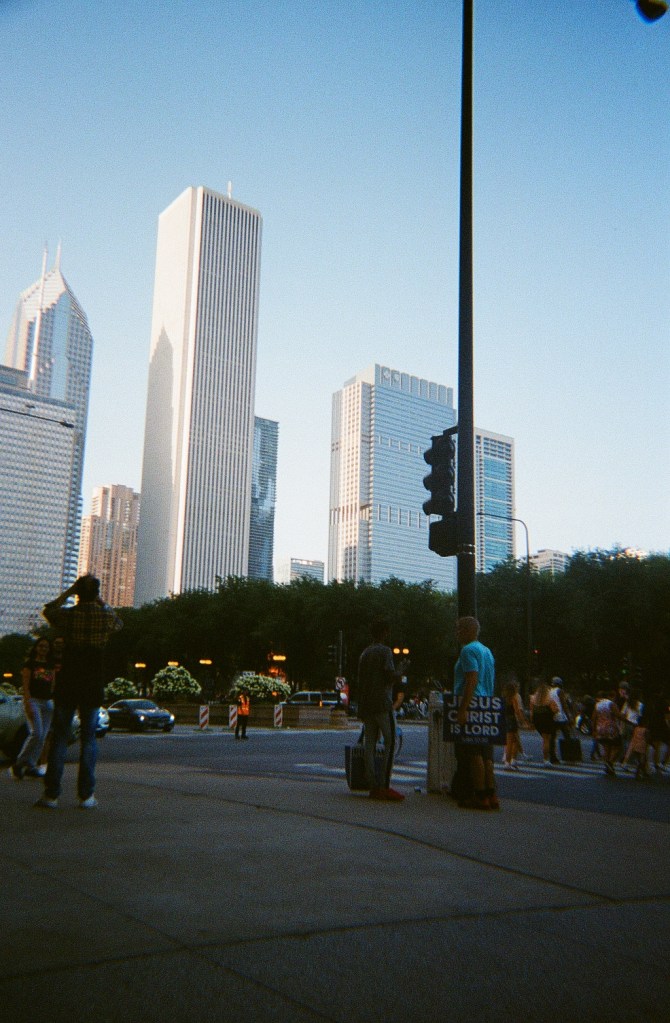

Despite the higher ISO of the film stock, I think these photos are quite dark, something which will become a running theme with this film. However, I love the framing of the metro tracks as seen through the rear window of the train (again a slight reflection makes an appearance) in the left hand image. The right hand image is one of my favourites I took on the trip; the framing of the people in the foreground, the beautiful pale colours of the buildings against the sky and the long shadows are spectacular. The bottom image is just a quick snap to remember that I’d seen this building, the magnificent Symphony Center.
All too soon, it was time to head west. I caught the Empire Builder from Chicago to Seattle, pictured here during a stop in Havre, Montana.
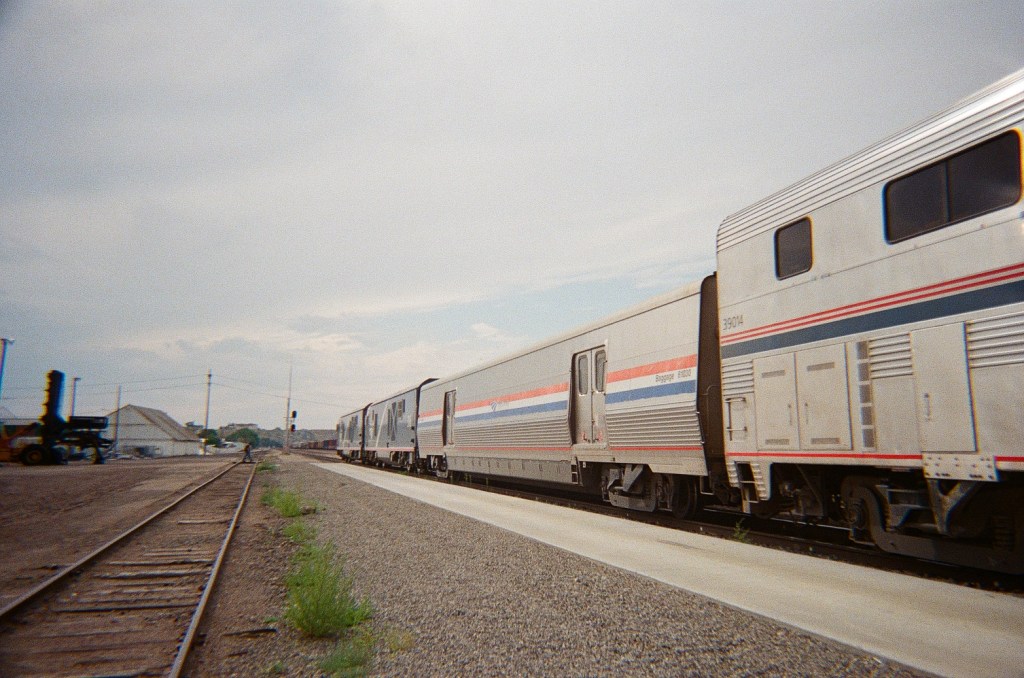
Here you can see both engines (the train splits at Spokane, WA), the luggage van and the front of the first sleeper car, where my room was. Near the front of the train, the driver is stretching his legs.
I’d recommend this train journey to anyone. Crossing half a continent by rail is an amazing experience. I ate dinner one evening while trundling over the Mississippi, and the next evening as we traversed the foothills of the Rocky Mountains. Waking up on the final day of the journey to see the Pacific Ocean right outside the window was incredible. Just make sure you book a room rather than attempting to survive 48 hours in a seat!
After I arrived in Seattle, I spent some time exploring and photographing the waterfront.
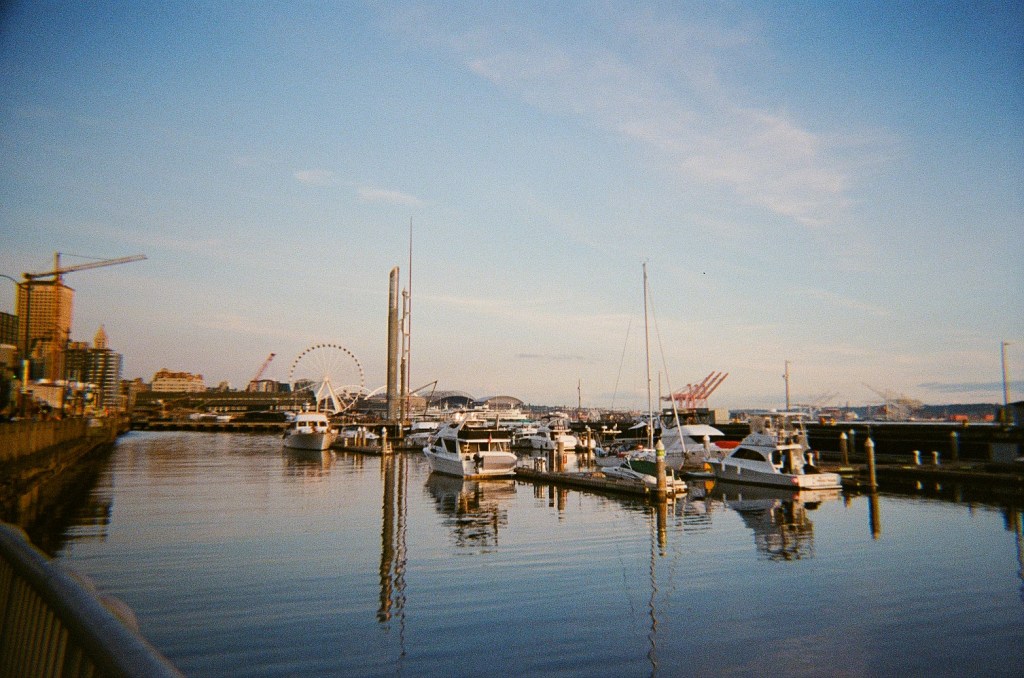
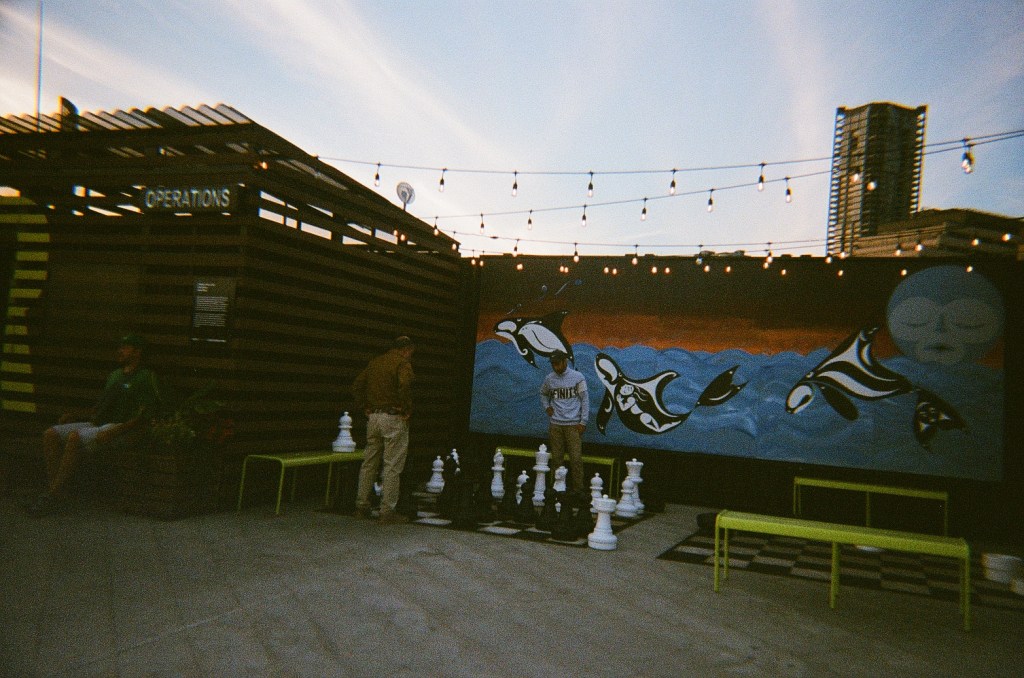
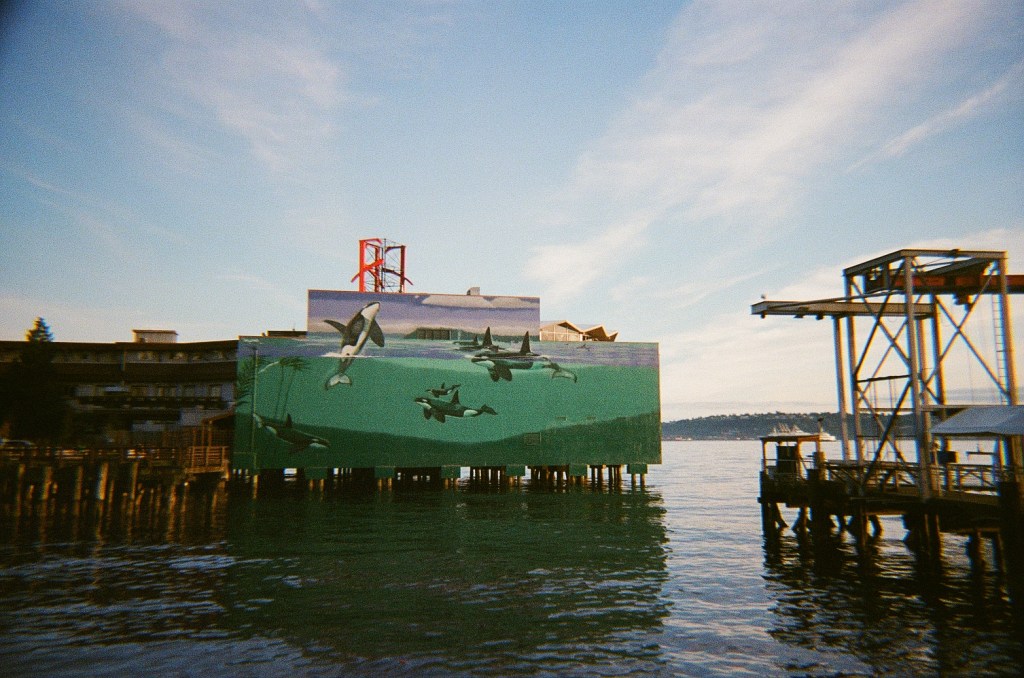
The top image is looking towards Mount Rainier, though it was not visible at that moment. I loved the visual of the black and white in the mural behind the black and white of the chess pieces in the bottom left photograph, though again it’s rather dark (this was taken at around 8pm I think). In the bottom right photograph you can see another orca mural on one of the wharf buildings. In hindsight I should have gone back to that spot in brighter light, as then there would have been a chance to capture a reflection of the mural in the water below.
Over the next few days I spent some time in Olympic National Park and Mt Rainier National Park.
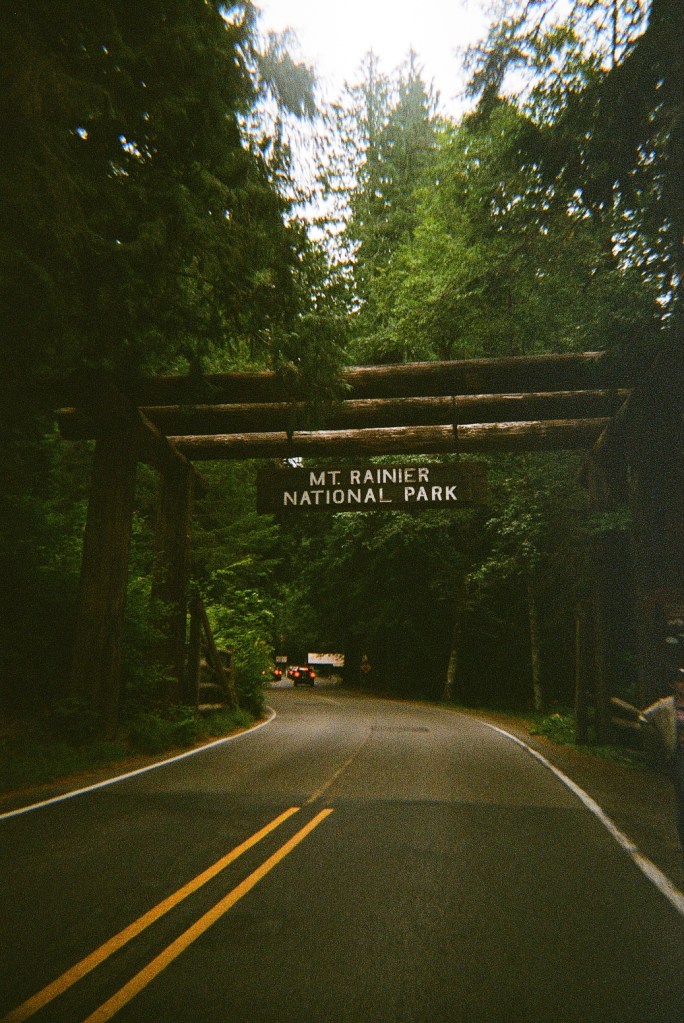
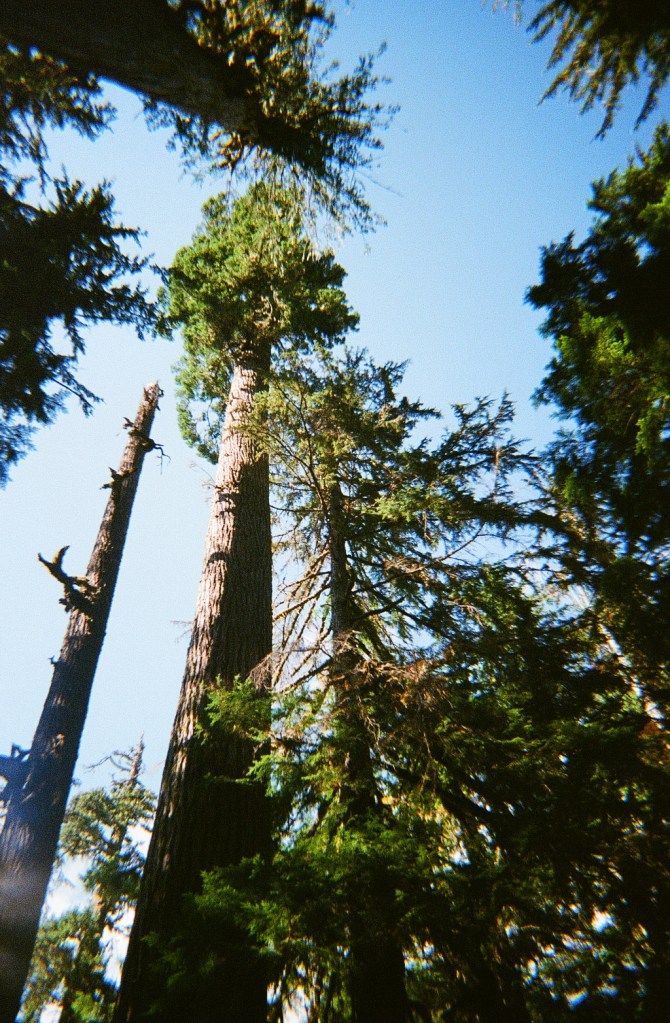
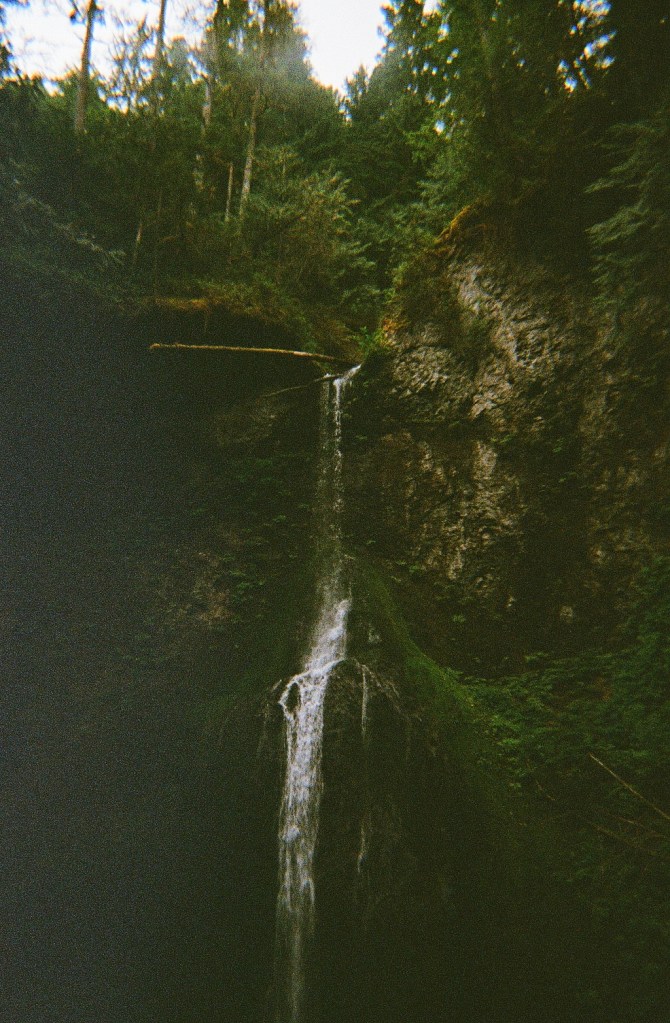
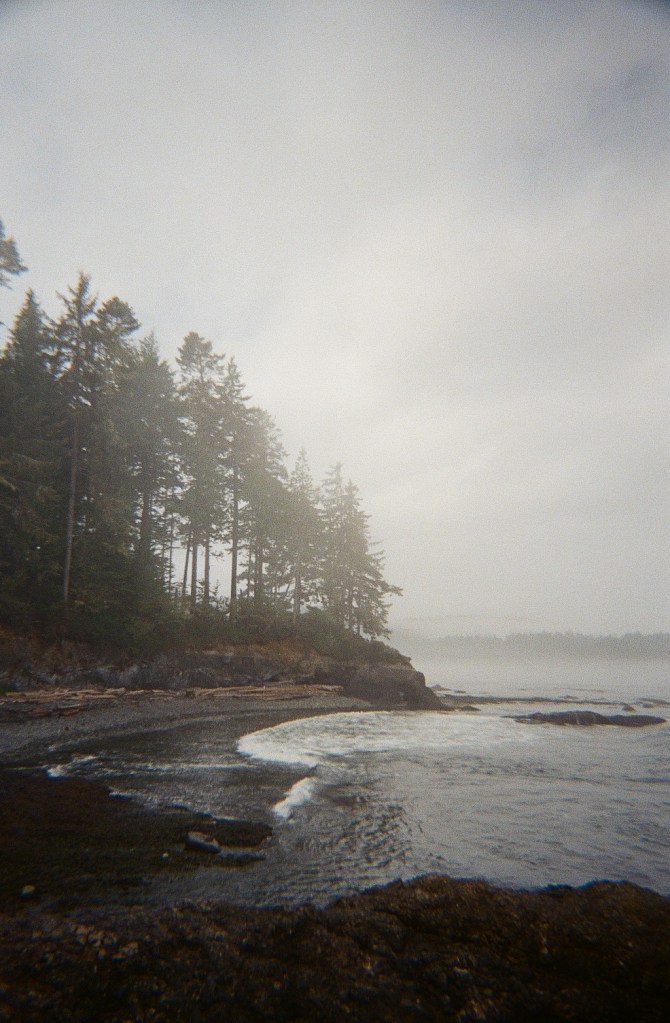
The colours in these came out beautifully, especially the greens. Again, in places they’re a bit dark, but combined with the grain of the film I think it makes for some very atmospheric images.
On my last day I took the ferry over to Victoria, BC, and thus was able to tick Canada off my list of countries to visit. Whilst there, I went on a whale watching tour in the Salish Sea.
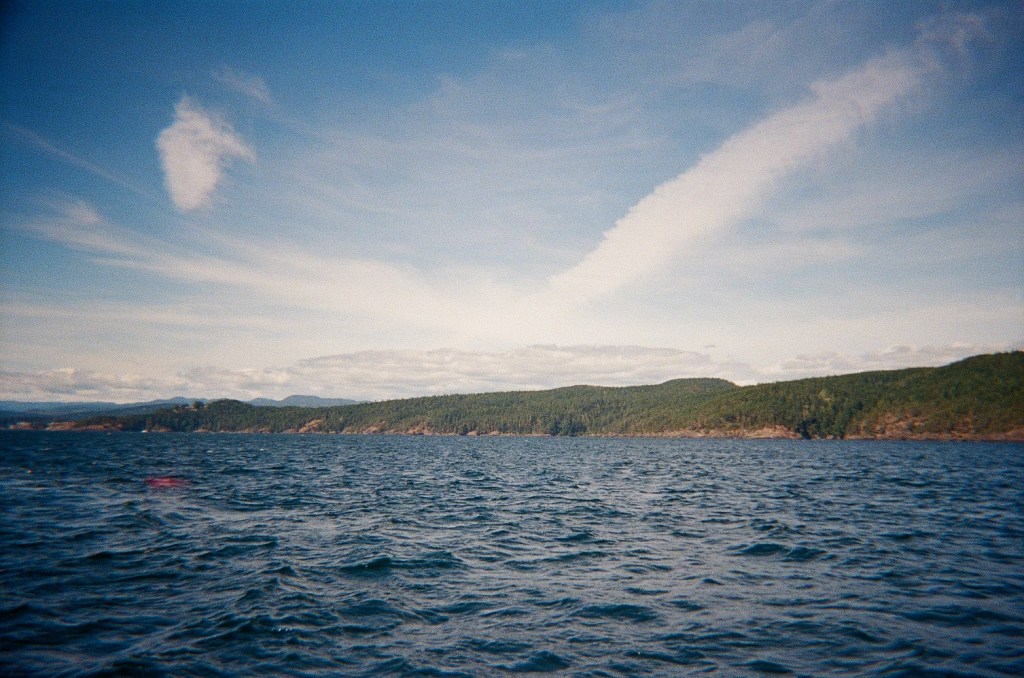
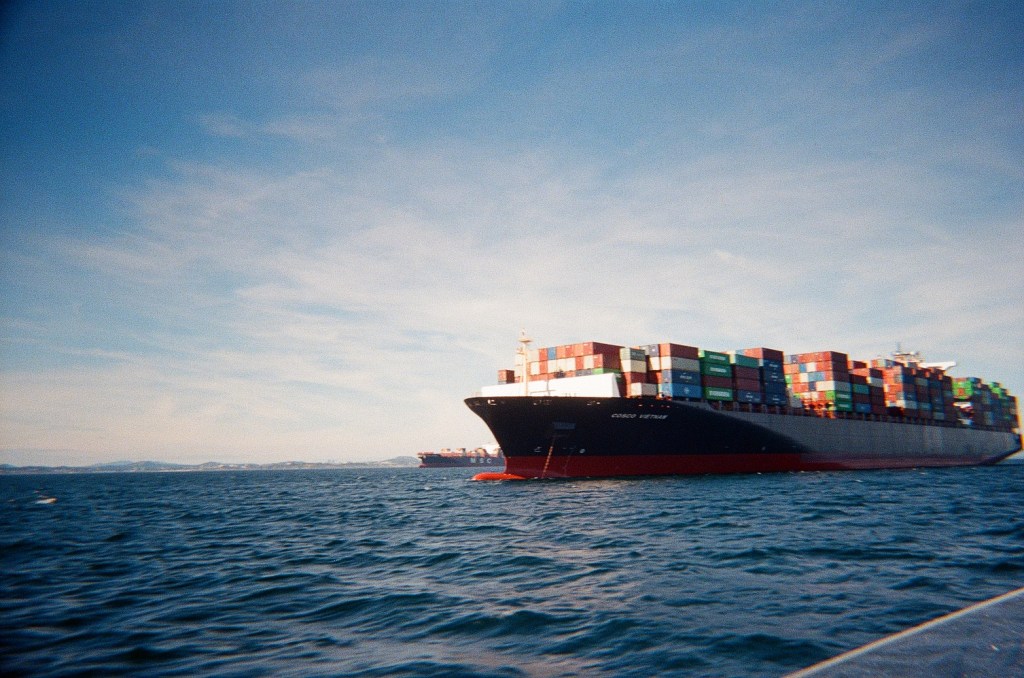

Unfortunately I didn’t manage to capture any whales on film, though I did get a few good shots of some killer whales with my digital camera. We also saw a humpback whale, but I didn’t manage to photograph that. Again, I love the colours in these photographs, especially in the photo of the container ship. The bottom photo shows the skyline of Seattle from the ferry as it returned to port.
Nearly last but definitely not least, my favourite photograph from the trip: a view of the Olympic mountain range from Hurricane Ridge.
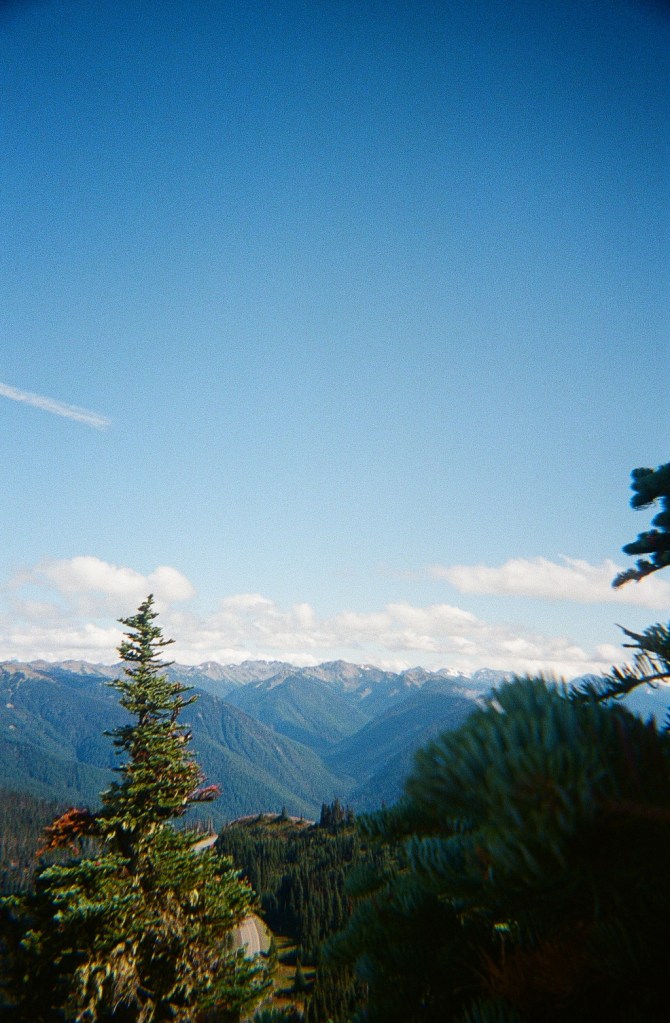
What I love about this photograph is that it evokes the sense of grandeur and isolation that I felt when seeing this landscape with my own eyes. The digital photographs I took of the same view feel too immediate and realistic; the image on film carries with it a dreamlike patina, enhanced by the middle-distance focus of the image. You can also tell that after two weeks of using the camera, I was more comfortable with it in my hands and was able to achieve a much better framing and image composition. The busy foreground acts as a good counterweight to the clear, light sky, and the dominant colours of green and blue are also in balance, divided by the strip of grey and white across the middle.
The Ansel Adams in my head has to wonder though — would it have looked even better in black and white?
As an addendum, I thought it worth pointing out that amongst these cherry picked decent photographs, there were a lot of mediocre ones and some downright bad. For example…
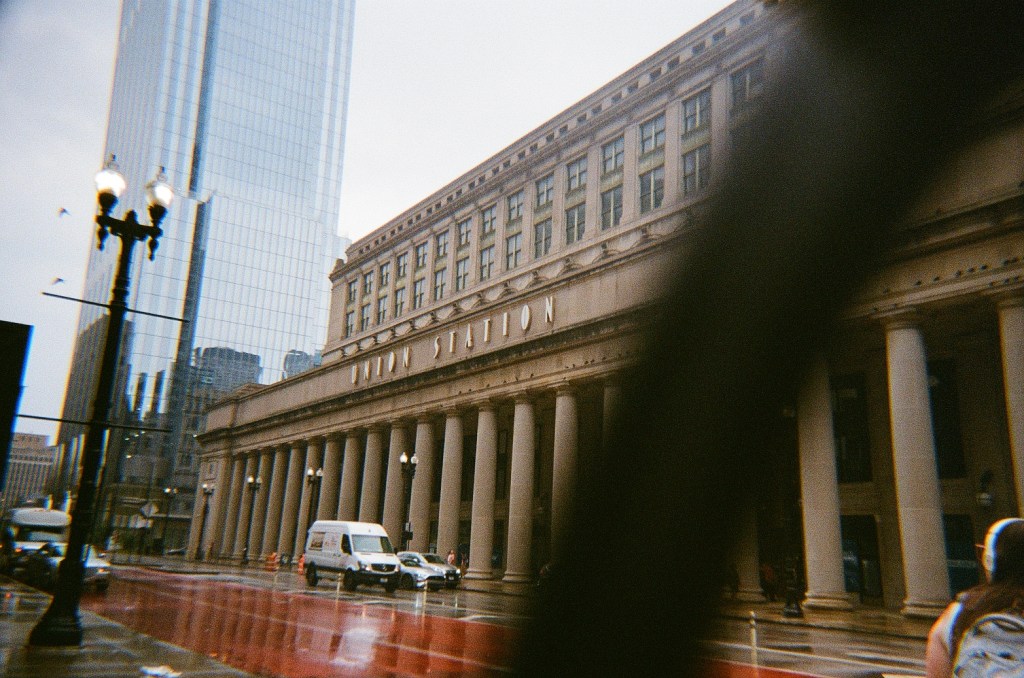
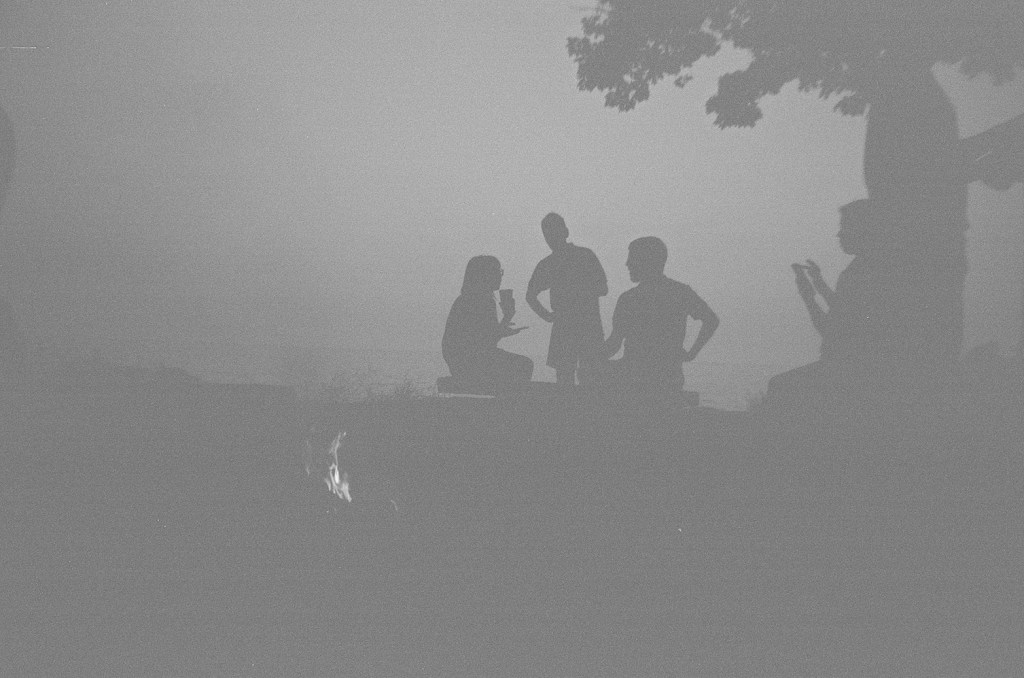

The first image would have been a great photo of Chicago Union Station in the rain, except for the camera strap flopping over the lens (it stays firmly round my wrist now). In the second, I completely forgot that I was shooting on film and that light levels were something I now needed to worry about (I kept on shooting after this even as it got darker, with predictably murky results). On the plus side, I do like the mysterious atmosphere it evokes.
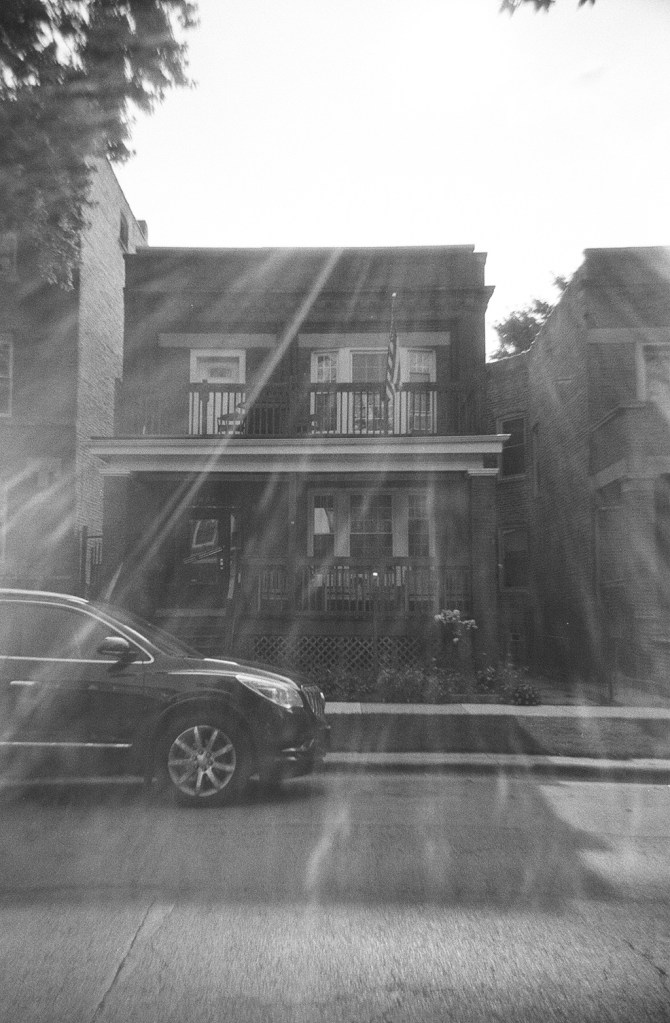
The next was me eagerly putting in the first roll of colour film and forgetting to take a couple of throwaway snaps to get the film wound properly on. The fourth image is a photo of the Airbnb I stayed in with some hefty lens flare, something else a lot of the first roll of film suffered from because I kept forgetting to turn my back to the sun.
And the last? Finger over the lens.
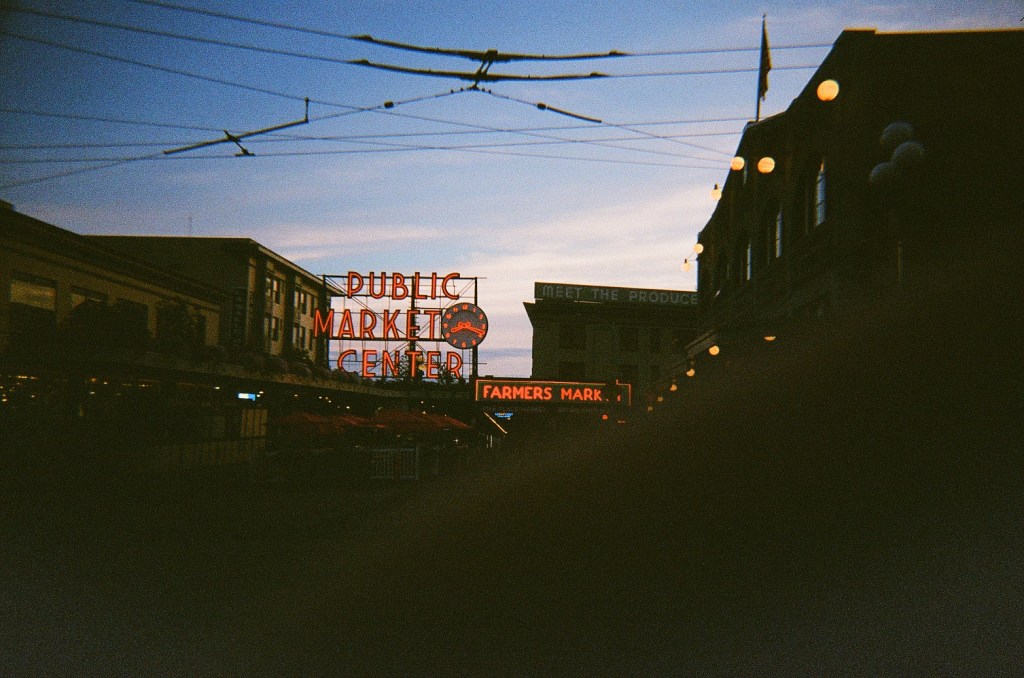
The perfect sunset and neon sign photograph remained uncaptured.
In conclusion, if you’re considering getting into (or back into) film photography, I highly recommend the Ilford Sprite 35. It’s so easy and fun to use, and you can take some great photographs. I’m still using it two months on from my trip, though I think I’ll soon be saving up for something slightly better — perhaps even a glass lens and adjustable focal length!
 Natalie B. Hogg
Leave a comment